In Serravalle di Ala, a 14,000 m² site – 6,000 m² of which is covered – integrating research, development, testing, prototyping and industrial production of MEA technologies
UFI Hydrogen’s development plan envisages investments of around 50 million euros by 2029 and a gradual increase in the workforce to around 100 jobs in the region
With the new Hydrogen Hub in Rovereto, Trentino is building an ecosystem covering approximately 40,000 m² and involving investments of around 100 million euros, spanning research, industrial validation and production
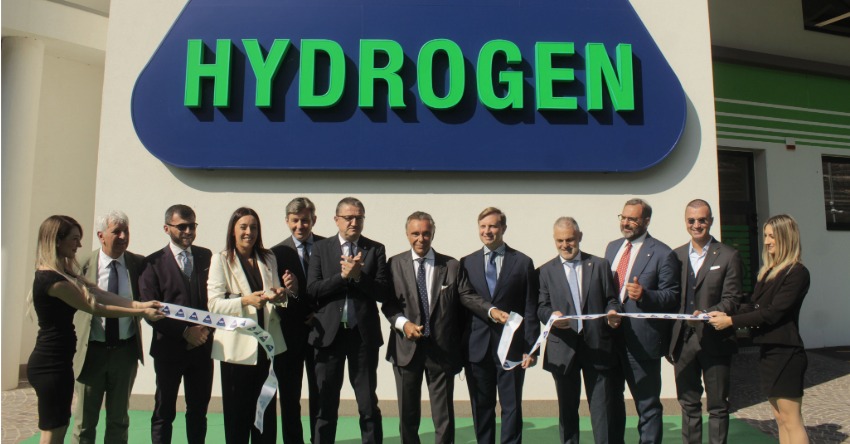
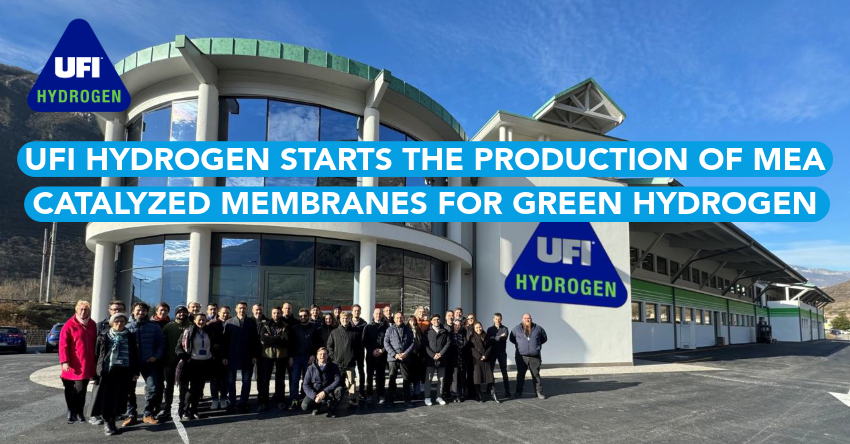
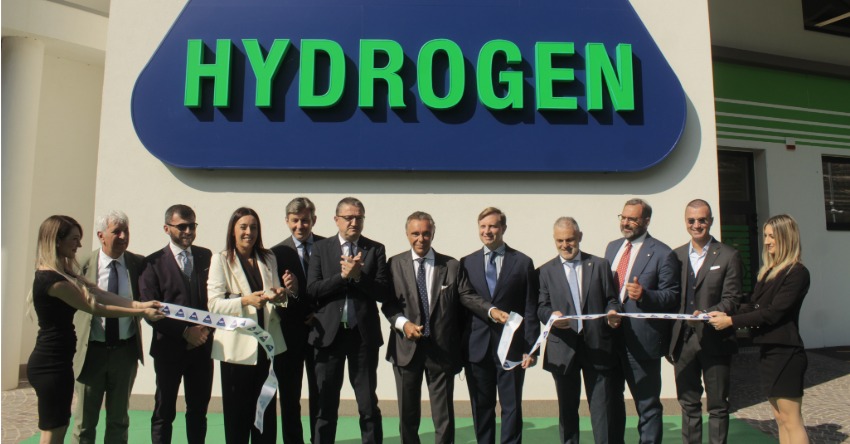
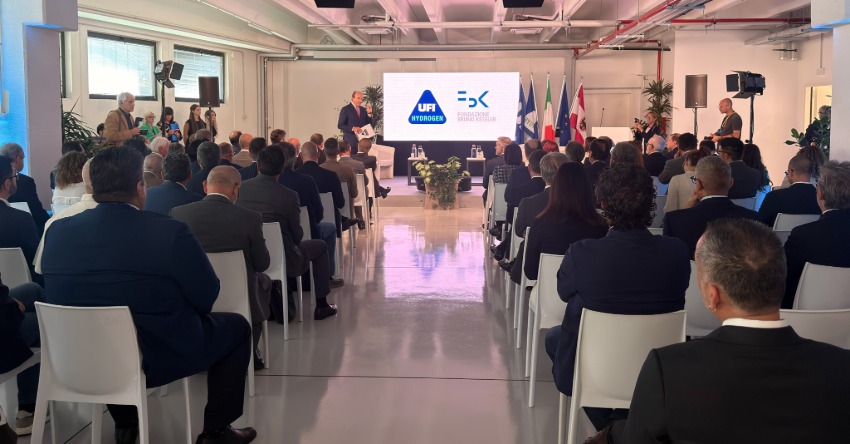
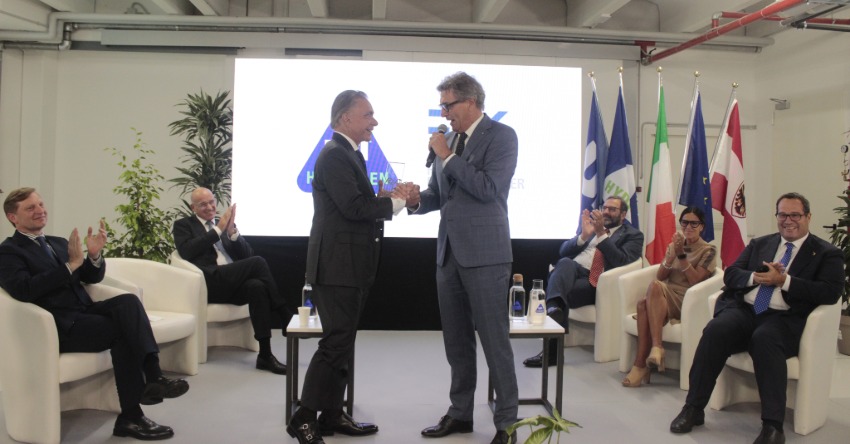
The new industrial and technological hub of UFI Hydrogen S.p.A., an Italian company within the UFI Filters Group dedicated to the development and industrialisation of MEA (Membrane Electrode Assembly) technologies – a strategic component for electrolysis, fuel cells and new electrochemical applications – was inaugurated today in Serravalle di Ala. Established in 2023 following a research and development programme launched in 2017 within the UFI Innovation Centre, UFI Hydrogen is now bringing a technology born of research and geared towards the market to full industrial scale.
The Serravalle site covers a total area of 14,000 m², of which 6,000 m² is covered, and brings together research and development, testing, prototyping, industrialisation, production and a technology showroom under one roof. Already operational from the first quarter of 2025, it represents UFI Hydrogen’s industrial hub in Europe. The development plan envisages investments of around 50 million euros by 2029 and a gradual increase in the workforce to around 100 jobs in the local area.
UFI Hydrogen: from research to industrial production
UFI Hydrogen was founded with the aim of industrialising one of the most critical components of the hydrogen value chain: the MEA, the catalysed membrane in which the electrochemical reaction takes place. In PEM electrolysers, it enables water molecules to be split to produce hydrogen using renewable energy; in fuel cells, it enables hydrogen to be converted back into electrical energy.
The company’s technology platform covers four main areas: hydrogen production via electrolysis, power generation via fuel cells, electrochemical conversion of CO₂ for the synthesis of e-fuels, and electrochemical compression of hydrogen for storage and transport applications. Its ability to develop and industrialise proprietary MEAs and CCMs places UFI Hydrogen in a highly specialised technological segment, with expertise held by only a limited number of operators at an international level.
UFI Hydrogen is also the only Italian company selected for the Hy2Move IPCEI – the Important Project of Common European Interest dedicated to hydrogen mobility – under which the R2RMEA project has been granted funding of up to approximately 22 million euros for the development and industrialisation of innovative MEAs for fuel cells using roll-to-roll production processes.
From hydrogen to new energy applications
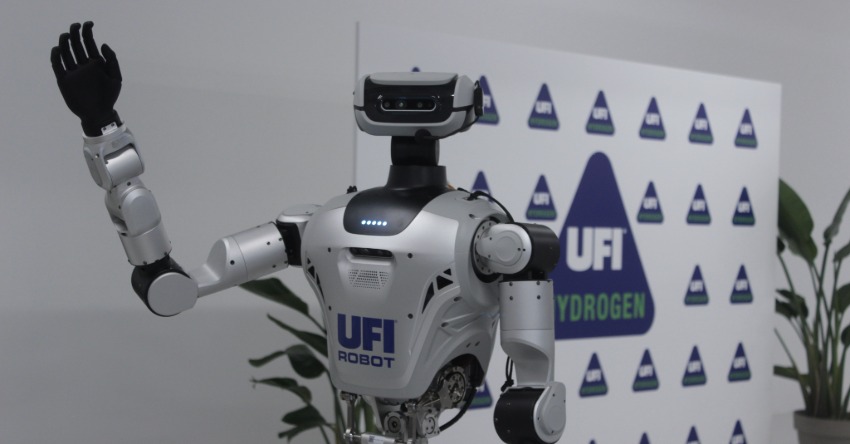
UFI Hydrogen’s development strategies focus on hard-to-abate industrial sectors, heavy goods transport and energy storage, as well as new demands for reliable, programmable and resilient energy linked to the growth of data centres, artificial intelligence, humanoid robotics and drones. In these markets, fuel cells and electrochemical systems can provide solutions that complement electrification and the grid, helping to make new, low-emission energy capacity available.
FBK: an infrastructure in Rovereto spanning research to industrial validation
Just a few kilometres from the UFI Hydrogen industrial hub, work began in 2026 in the Rovereto industrial area on the new Trentino Hydrogen Hub, a scientific and technological infrastructure promoted by the Autonomous Province of Trento and developed in collaboration with the Bruno Kessler Foundation (FBK) and Trentino Sviluppo. The new facilities at FBK’s Sustainable Energy Centre will cover approximately 25,000 m² and are being built through European programmes and provincial funding, representing a total investment of around 50 million euros.
The Hub is designed to support technologies from materials research through to prototyping and industrial-scale validation, with testing capabilities for hydrogen and batteries up to the megawatt scale. The strategic partnership between UFI Hydrogen and FBK, in particular with the Sustainable Energy Centre, focuses on research and innovation into next-generation MEAs and strengthens the link between scientific expertise and industrial capacity.
A Trentino-based ecosystem covering approximately 40,000 m² and investments in the region of 100 million euros
The complementarity between UFI Hydrogen’s industrial hub in Serravalle di Ala and FBK’s new facilities in Rovereto is giving shape to a regional ecosystem in Trentino covering approximately 40,000 m², supported by two distinct investment programmes totalling around 100 million euros. Within a few kilometres, expertise spanning the entire innovation chain is thus concentrated: fundamental and applied research, technological development, testing, prototyping, industrial validation, scale-up and production.
The Hub forms part of the Autonomous Province of Trento’s strategy for the energy transition and the development of innovative industrial supply chains, drawing on the region’s scientific expertise and collaboration between institutions, research bodies and businesses. The aim is to consolidate a stable link between technological development, experimentation and industrial production, accelerating the market roll-out of European technologies for hydrogen, batteries and electrochemistry, and contributing to European competitiveness and energy security.
Statements
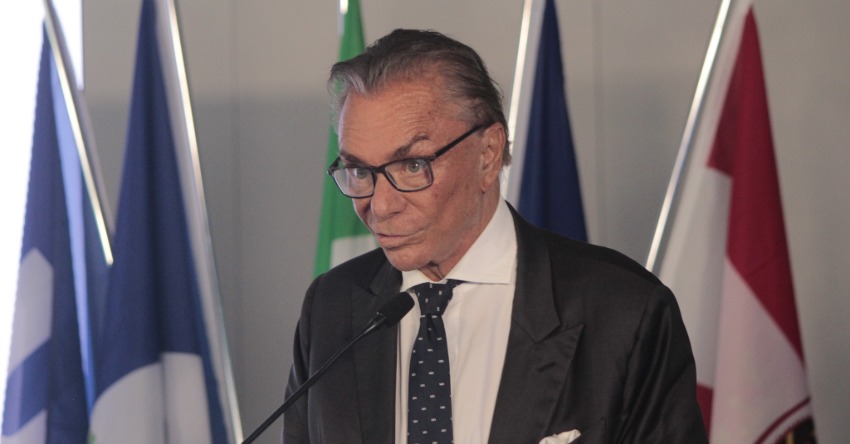
Giorgio Girondi, Cavaliere del Lavoro, Chairman of UFI Hydrogen and Chairman of the UFI Filters Group: “UFI’s history has always been driven by the ability to look ahead, anticipate the future, invest in new technologies and turn a vision into an industry. With UFI Hydrogen, we have made a clear choice: not simply to create a new division, but a dedicated company with its own expertise, management and investment. We believe that hydrogen and electrochemistry can represent a new industrial frontier, and we want to help build it from Italy, with European technology and global ambition. These applications are no longer just a matter for the future: they are already becoming a reality. Fincantieri recently launched the Viking Libra, a cruise ship incorporating a hydrogen-powered fuel cell system, whilst in aviation, major programmes are already underway to develop hydrogen propulsion systems. In heavy goods transport too, fuel-cell lorries are gradually entering the testing phase and coming into use on European roads. I believe that Europe must look very closely at this model and create the conditions for hydrogen to complement other solutions as an additional energy carrier, especially in sectors that are more difficult to electrify. When produced using renewable energy, hydrogen allows energy to be stored, transported and made available again when and where it is needed, without CO₂ emissions at the point of use. Europe cannot simply invent the future: it must also bring it to life. It all starts with water, the simplest and most vital element. From water we extract hydrogen and oxygen, and through hydrogen we can once again produce energy. It is a process that brings us back to nature and can increase the energy capacity at our disposal without continuing to rely on oil and natural gas.”
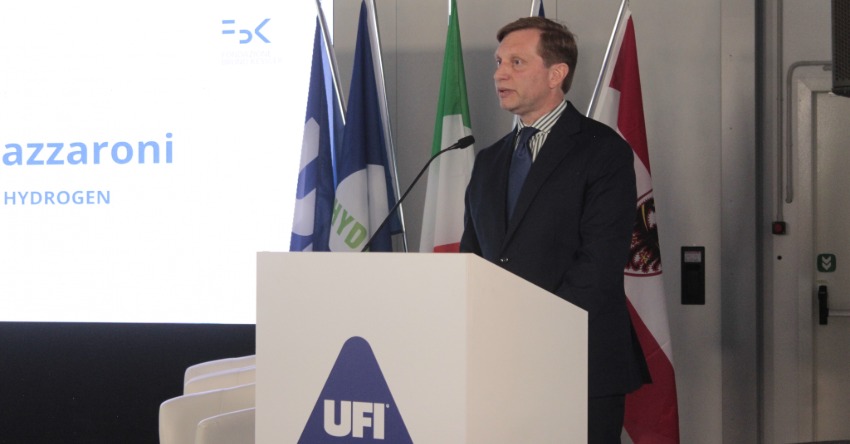
Marco Lazzaroni, CEO of UFI Hydrogen: “With the opening of UFI Hydrogen’s new headquarters and plant in Ala, we are giving industrial form to a technological vision born of research and innovation. The MEA is the ‘chip’ of electrochemistry: a strategic technology upon which we are building an Italian and European platform for hydrogen and fuel cells. In the age of artificial intelligence, the availability of energy capacity will increasingly become a factor in competitiveness: the challenge is to develop innovative technologies capable of making new energy capacity available in a reliable, programmable and resilient manner. A platform with practical applications in hard-to-abate sectors, data centres, humanoid robotics, drones and heavy goods transport, taking research all the way to industrialisation and contributing to European technological and energy autonomy.”
Ferruccio Resta, President of the Bruno Kessler Foundation:
“Europe’s industrial competitiveness, security and resilience depend on its ability to develop strategic technologies and reduce dependencies. FBK is rising to this challenge by working in the fields of human-centred artificial intelligence, chips, cyber security and energy. The Hydrogen Cluster translates this commitment into action on the ground thanks to the forward-thinking approach of Trentino’s political leadership and collaboration with industrial partners such as UFI. This has given rise to a unique ecosystem on the national stage, bringing together local institutions, the business community and research, whilst strengthening synergies with the University of Trento. In a constantly changing world, our task is to give knowledge the power to become industrial capability and opportunities for people.”







Comments are closed.